Authiors: Suping Li, Yinlong Zhang, Jing Wang, Ying Zhao, Tianjiao Ji, Xiao Zhao, Yanping Ding, Xiaozheng Zhao, Ruifang Zhao, Feng Li, Xiao Yang, Shaoli Liu, Zhaofei Liu, Jianhao Lai, Andrew K. Whittaker, Gregory J. Anderson, Jingyan Wei & Guangjun Nie
Nature Biomedical Engineering 2017, 1 (8), 667-679.
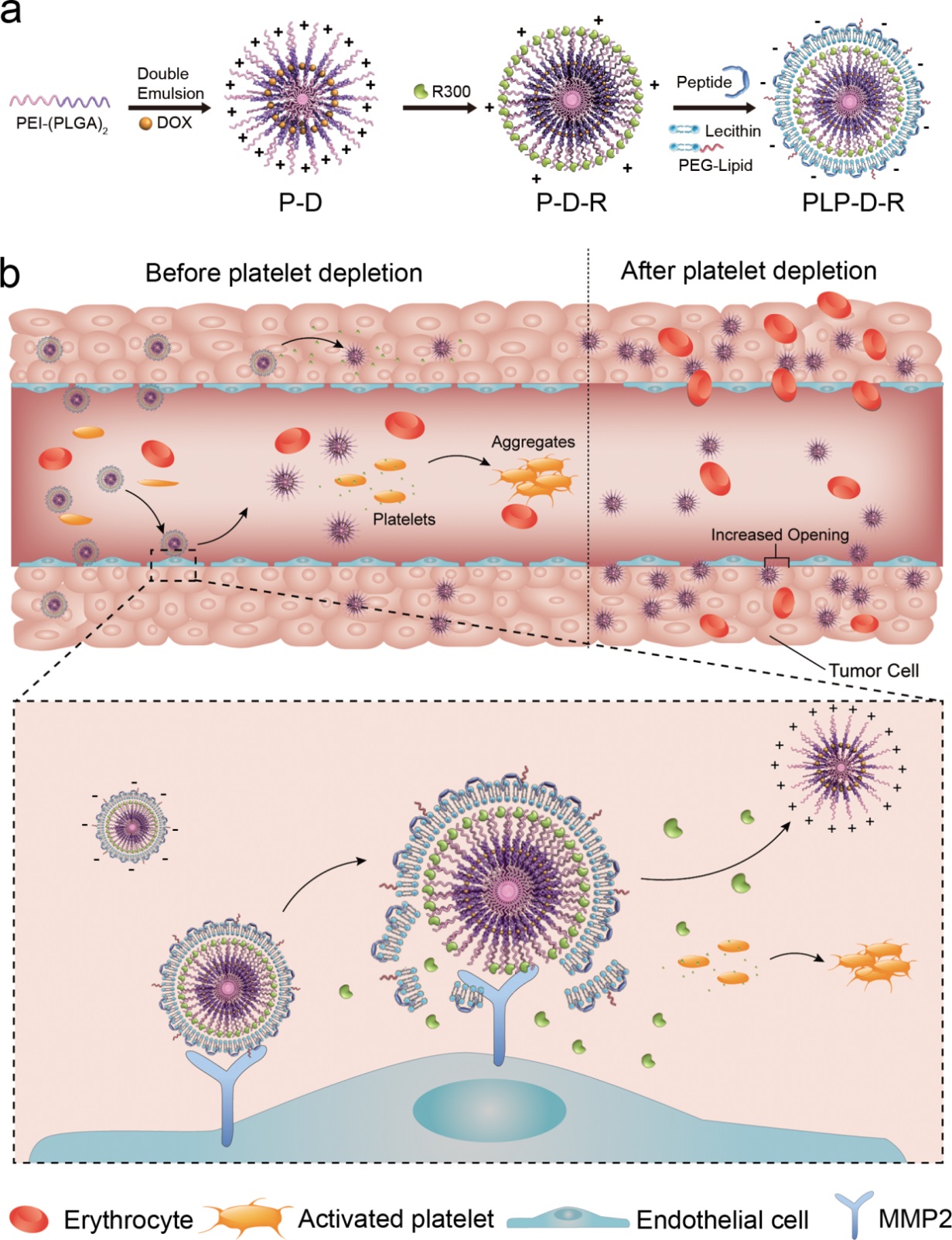
Abstract: Limited intratumoural perfusion and nanoparticle retention remain major bottlenecks for the delivery of nanoparticle therapeutics into tumours. Here, we show that polymer–lipid–peptide nanoparticles delivering the antiplatelet antibody R300 and the chemotherapeutic agent doxorubicin can locally deplete tumour-associated platelets, thereby enhancing vascular permeability and augmenting the accumulation of the nanoparticles in tumours. R300 is specifically released in the tumour on cleavage of the lipid–peptide shell of the nanoparticles by matrix metalloprotease 2, which is commonly overexpressed in tumour vascular endothelia and stroma, thus facilitating vascular breaches that enhance tumour permeability. We also show that this strategy leads to substantial tumour regression and metastasis inhibition in mice.
原文链接:https://www.nature.com/articles/s41551-017-0115-8

